
Book Review: Cancer Reconsidered

Updated: 7 hours ago

Who will benefit most from Erik Peper's expanded guide, what it gets right, and which conclusions go beyond current science
Clients with cancer ask our field hard questions. They want to know what they can do between appointments, beyond showing up for treatment. Cancer Reconsidered answers that question at length and with unusual warmth (Peper et al., 2026). Its lead author, Erik Peper, has taught self-regulation skills to generations of biofeedback practitioners. This review explains what the book offers our professionals and who needs to read it carefully.
Our review has three aims. It identifies the readers who will benefit most and describes what the book gets right. It also identifies the most important conclusions that current science does not support. Our judgment is a qualified endorsement. The book offers usable coping exercises and patient questions, interwoven with claims that need correction or context.

The book at a glance
Cancer Reconsidered is the expanded second edition of a 2011 book and now runs 572 pages. New chapters cover genetics, environment, and lifestyle and update the Gorter Model, and eight appendices add practical tools.

This thought-provoking book began life as Fighting Cancer: A Nontoxic Approach to Treatment (Gorter & Peper, 2011). The new edition adds Nancy Faass as coauthor and, by the authors' count, more than 170 pages of material (Peper et al., 2026). Biofeedback Health of Berkeley issued it in spring 2026 as a 572-page paperback and an e-book (Regent Press, n.d.). The listed prices are $34.95 and $12.99.
Seven parts organize 23 chapters. Part I is new and covers genetics, environmental exposures, food, movement, sleep, and lifestyle medicine. It closes with an updated chapter on the Gorter Model, an immunotherapy program. Parts II and III reprint the first edition's patient questions and its account of that model. Part IV teaches breathing, relaxation, imagery, and hope, followed by eight appendices.
Who will benefit most
Clinicians who teach self-regulation to people touched by cancer will gain the most, provided they select and frame the material. Educators, graduate students, survivors, and caregivers will also find value.
Biofeedback and neurofeedback practitioners who see clients with cancer will benefit most. Part IV supplies scripts and brief practices that can be adapted to a training session. Peper writes as a colleague and as a survivor. He is a past president of the Association for Applied Psychophysiology and Biofeedback and received its Distinguished Scientist Award in 2013 (Peper et al., 2026). He describes the fear that followed his melanoma with disarming candor.
That readership is large. The American Cancer Society projected 2,114,850 new cancer cases and 626,140 cancer deaths in the United States for 2026 (Siegel et al., 2026). Many of our clients will be patients, survivors, or caregivers. They deserve practitioners who can discuss self-regulation and cancer accurately and with care.
Allied professionals form a second audience. Health psychologists, counselors, nurses, and health coaches will find usable material in the lifestyle chapters and the question lists. Educators and graduate students gain a different benefit. The book pairs strong practice chapters with claims that invite critical appraisal, which makes it a rich teaching text.
Survivors and caregivers who want an active role in recovery are a third audience. They will benefit most when a clinician selects chapters and provides context. People interested in prevention will value the chapters on food, movement, sleep, and environmental exposures. Readers who want an evidence review of cancer treatments should look elsewhere.
What the book gets right about cancer risk and lifestyle
The book is right that inherited genes are not destiny and that behavior influences cancer risk and recovery. Its best support comes from trials in which lifestyle change accompanied conventional care.
The opening chapters argue that inherited genes load the dice but rarely decide the game. The best twin evidence supports a version of that claim. A Nordic study of 203,691 twins estimated overall cancer heritability at 33% (Mucci et al., 2016). Heritability ran higher for some sites, including 58% for melanoma and 57% for prostate cancer. Clinicians can tell clients that inherited risk matters, varies by cancer, and leaves room for behavior.
Two cautions apply. A heritability estimate does not reveal the share of cancers that behavior can prevent. The book also calls genetics a minor and nonpredictive factor, which overlooks an important distinction (Peper et al., 2026). Up to 10% of cancers may stem from inherited changes, yet cancer always involves genetic changes, most of which arise during life (National Cancer Institute, 2024). Inherited risk can therefore be informative without being deterministic.
The authors lean on Dean Ornish's prostate cancer lifestyle trial, and the trial deserves attention. Ninety-three men with early disease chose active surveillance and were randomized to intensive lifestyle change or usual care (Ornish et al., 2005). By two years, 5% of the lifestyle group and 27% of controls had undergone conventional treatment (Frattaroli et al., 2008). The finding concerns low-risk prostate cancer under close monitoring. It shows fewer men moving to treatment, and it does not establish cancer reversal or longer survival.
The book's account of this trial needs one correction. It says that natural killer cells from the lifestyle group were seven times more capable of destroying cancer (Peper et al., 2026). The trial measured something different. Serum from lifestyle participants inhibited the growth of cultured prostate cancer cells by 70%, compared with 9% for controls (Ornish et al., 2005). That result came from a serum assay, not a test of natural killer cells.
Stronger evidence has appeared since the first edition, and it favors the book's emphasis on movement. A phase 3 trial randomized 889 colon cancer patients to a three-year structured exercise program or health education (Courneya et al., 2025).
Five-year disease-free survival was 80.3% with exercise and 73.9% with education. In that trial, exercise followed surgery and chemotherapy and did not replace them. That is a model of lifestyle medicine our field can endorse.
The remaining new chapters translate research into daily choices. Readers learn about the exposome, the lifetime sum of environmental exposures, and about plastics, pesticides, and ultra-processed food (Peper et al., 2026).
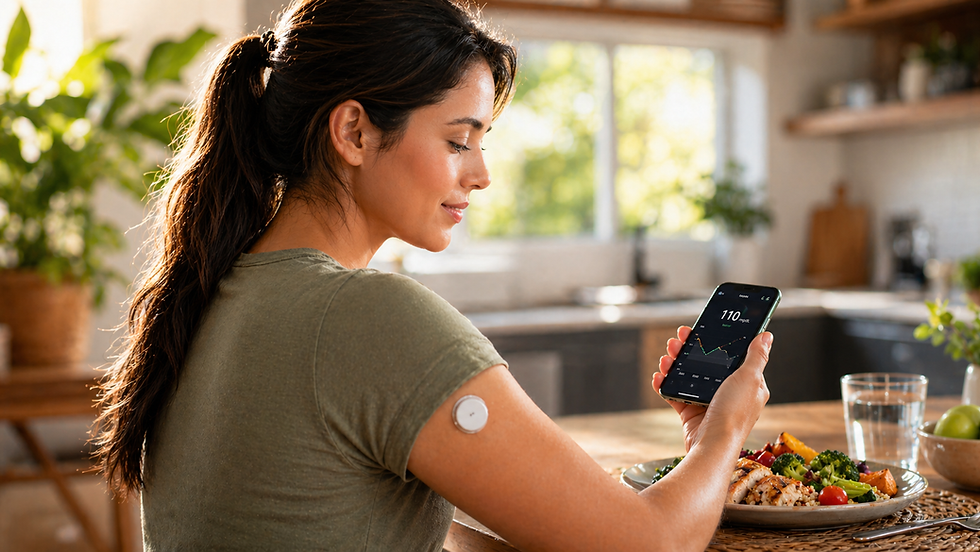
A section on the continuous glucose monitor shows how wearable data can reveal personal responses to meals, sleep, and stress. Biofeedback clinicians will recognize the method. It is self-monitoring in the service of self-regulation.
What the book gets right about self-regulation
Part IV presents breathing, relaxation, imagery, and reframing exercises as complements to treatment, as guidelines support. Some surrounding explanations overstate effects on immunity and cancer, so clinicians should select and frame the exercises.
Part IV is where Peper's decades of teaching show. He opens with the psychophysiological principle of Elmer and Alice Green, the idea that every mental change has a bodily counterpart (Peper et al., 2026). Twenty-five numbered practices follow, most of them brief. Clients imagine slicing a lemon, test how posture alters mood, and discover how incomplete exhalation produces symptoms. Each practice turns a concept into an experience.
The breathing chapter will feel like home to HRV biofeedback providers. It teaches diaphragmatic breathing with a small weight on the abdomen and lets the rate slow toward six or seven breaths per minute. It shows clients how to exhale through anticipated pain during procedures and position changes. The authors are careful about scope. They write that these techniques “will not cure cancer, but they can be a helpful complement to treatment” (Peper et al., 2026, p. 315).
Clinical guidelines support this complementary role. A joint guideline from two oncology societies reviewed 110 studies of integrative care for anxiety and depression symptoms (Carlson et al., 2023). It recommends mindfulness-based interventions, yoga, relaxation, and music therapy for anxiety symptoms during active treatment.
In an early pilot trial with 34 cancer survivors, heart rate variability (HRV) biofeedback improved sleep symptoms, with nonsignificant trends for other symptoms (Burch et al., 2020). These findings support specific practices but do not validate the book's overall self-care program.
The closing chapters on imagery and hope offer humane and practical material. The authors explain the placebo response and its opposite, the nocebo response, and they show how a clinician's words can produce either. They acknowledge that good thoughts alone may not beat cancer. They also urge self-compassion in place of self-blame.
That compassionate message coexists with passages that pull the other way. A table of remission factors includes taking responsibility for the disease and its outcome (Peper et al., 2026). One case description wonders whether a patient's tongue cancer arose from unexpressed feelings. The book offers an arm-strength exercise as a metaphor for how memories affect immunity. Clients who fear they caused their illness need a clinician to address these mixed messages directly.
What the book gets right about patient decision-making
The book's question lists help patients ask about absolute benefits, harms, alternatives, and quality of life. The explanations around those questions are less reliable and need checking.
The book's most transferable decision tool is its set of questions. A chapter of questions the authors wish they had asked coaches patients to request absolute risks and benefits (Peper et al., 2026). It asks how a treatment would change quality and length of life compared with the alternatives. An appendix on evaluating health information adds questions about who profits and whether claims rest on peer-reviewed research. These prompts support shared decision-making.
The surrounding explanations require more care. One worked example of relative and absolute risk describes halved deaths as twice as many survivors (Peper et al., 2026). The chapter states that feeling empowered inhibits cancer cell growth. The appendix suggests that interventions absent from our evolutionary past are likely to be harmful. Novelty alone cannot establish harm, just as natural origin cannot establish safety.
The chapter also reassures readers that most cancers grow slowly and allow time for decisions. That reassurance does not hold for every cancer. Clients should ask the oncology team what interval is medically safe for gathering information or a second opinion. With that adjustment, the question lists are ready for clinical use.
Conclusions that current science does not support
Five of the book's conclusions go beyond current evidence. The main concern is the Gorter Model's effectiveness and the mixed messages about substituting nontoxic therapy for conventional treatment.
Five conclusions go beyond what current science supports. We list them in order of clinical importance. Each matters because a client may act on it.
First, the book concludes that the Gorter Model produces remission in advanced cancer. The model combines whole-body and local hyperthermia, a dendritic cell vaccine, mistletoe injections, and intravenous nutrients (Peper et al., 2026). Robert Gorter developed it, drawing on anthroposophic medicine and his earlier AIDS research. The book reports complete remission in 48% of treated patients with recurrent glioblastoma. It also states that about 80% of patients experienced remission or longer life.
These figures rest on case histories and uncontrolled outcome counts. The authors acknowledge that no randomized controlled trial has tested the model, a gap they attribute to cost (Peper et al., 2026). The glioblastoma figure cites the authors' own magazine article, not a peer-reviewed outcome study.
Uncontrolled series cannot separate treatment effects from patient selection, concurrent therapy, or natural variation in disease course. Remission rates of this size would transform oncology if confirmed, so they require confirmation.
Controlled studies of related interventions provide evidence for particular treatments in particular settings. Sipuleucel-T, an approved cellular vaccine, extended median survival in advanced prostate cancer by 4.1 months (Kantoff et al., 2010). In a glioblastoma trial, a dendritic cell vaccine was associated with median survival of 13.2 months after recurrence (Liau et al., 2023). The external control group, drawn from other trials, had a median survival of 7.8 months. That comparison was not randomized.
Regional hyperthermia has randomized support in at least one setting. Adding it to radiotherapy raised 12-year survival from 20% to 37% among 114 women with cervical cancer (Franckena et al., 2008). That substantial difference applies to regional heating with radiation, and the trial did not test whole-body fever therapy. None of these studies validates the combined Gorter protocol. Their outcomes also cannot be compared directly with the book's remission percentages.
Mistletoe evidence should be read by outcome. A Cochrane review of 21 trials judged the evidence for longer survival to be weak (Horneber et al., 2008). It noted possible quality-of-life benefits during breast cancer chemotherapy that needed replication. A later placebo-controlled trial in 290 patients with advanced pancreatic cancer found no benefit for survival or global quality of life (Wode et al., 2024). Neither line of evidence establishes the combined protocol's efficacy.
Second, the book sends mixed messages about substituting nontoxic therapy for conventional treatment. It presents its approach as integrating natural and medical therapies and says it does not advise forgoing necessary treatment (Peper et al., 2026).
Yet Gorter's own story celebrates recovery from metastatic testicular cancer without chemotherapy. Modern chemotherapy and surgery cure about 80% of such patients (Einhorn, 2002). Readers could take that story, and the book's sweeping criticism of oncology, as encouragement to substitute unproven treatment.
The risk of substitution is documented. A retrospective matched study followed patients with nonmetastatic cancers who chose alternative medicine alone (Johnson et al., 2018). Their adjusted hazard ratio for death was 2.50 compared with patients who received conventional treatment. The study did not examine the Gorter Model. It does show why the book's contrary signals deserve a clear word from the clinician.
Third, the fever chapter concludes that childhood vaccines, by averting fevers, may leave people more vulnerable to cancer later (Peper et al., 2026). The argument extrapolates from fever physiology and three older observational studies of infection history. Those sources do not show that vaccination raises cancer risk.
The chapter also questions measles and pertussis vaccination and discourages routine vaccination against chickenpox and rubella, while endorsing polio vaccination.
Current evidence points the other way. Rubella infection in early pregnancy can cause miscarriage, stillbirth, or congenital rubella syndrome (Centers for Disease Control and Prevention, 2024). Some vaccines also prevent cancer. In a Swedish cohort of 1.67 million girls and women, HPV vaccination was associated with a substantially lower rate of invasive cervical cancer (Lei et al., 2020). Clinicians who lend the book to clients should flag this section.
Fourth, a chapter retained from 2011 presents cancer death rates as essentially unchanged over fifty years (Peper et al., 2026). That historical picture is no longer current. The age-adjusted cancer death rate in the United States fell 34% from 1991 through 2023 (Siegel et al., 2026). The American Cancer Society estimates that the decline averted about 4.8 million deaths and credits less smoking, earlier detection, and better treatment. Clients deserve to hear that conventional prevention and care are working.
Fifth, the mind-body chapters state that positive emotions mobilize immunity and that empowering beliefs are associated with remission (Peper et al., 2026). The trial evidence is more specific. A 2026 meta-analysis of 32 randomized trials found lower mortality with structured psychosocial interventions added to medical care (Asakawa-Haas et al., 2026). The pooled hazard ratio was 0.80, certainty was rated moderate, and the prediction interval included no effect. A second 2026 synthesis, drawing on much of the same literature, pooled 24 trials and reported a hazard ratio of 0.87 (McCarvell et al., 2026).
These results suggest a possible survival benefit from structured psychosocial care delivered alongside oncology treatment. They do not show that positive thinking alone causes remission or that immune changes explain the benefit. They do not show that a patient's attitude determines treatment success.
An earlier critical review found no positive result among trials designed with survival as the primary endpoint and without confounded medical care (Coyne et al., 2007). The dependable promise of self-regulation remains better sleep, less pain and fear, and more agency.
These conclusions surface in the practical chapters as well as the treatment chapters. Many breathing, relaxation, and coping exercises remain useful, although their explanations sometimes overstate effects on immunity, cancer growth, or survival. Clinicians should select and frame individual exercises and should not endorse whole chapters without qualification.
How to use this book in practice
Select individual practices and question lists, supply the missing context, and refer questions about cancer treatment to the oncology team.
We suggest starting with Part IV and choosing practices one at a time. Clinicians can assign a breathing or relaxation script as homework and pair it with in-session physiological monitoring. The question lists suit any client who faces a major medical decision. The lifestyle chapters support conversations about sleep, movement, and food.
Scope of practice matters here. Biofeedback professionals teach self-regulation and do not direct cancer treatment. When a client asks about hyperthermia, vaccines, mistletoe, or infusions, refer them to the oncology team. A reputable integrative oncology service can review such options alongside standard care. Encourage clients to bring the book's question lists to that visit.
Finally, consider who should receive the whole book. A colleague or graduate student can read all 572 pages critically and profit from the exercise. A frightened, newly diagnosed client will benefit more from selected pages and a clinician's guidance. That choice respects both the client's hope and the client's safety.
Integrative summary and five key takeaways
Cancer Reconsidered earns a qualified endorsement. Biofeedback professionals will find helpful coping exercises, lifestyle guidance, and patient questions, and current evidence supports several of them. Those strengths are interwoven with claims about immunity, remission, vaccination, and treatment that current science does not support. The Gorter Model's reported outcomes remain untested by randomized trials. Used selectively and with context, the book can serve clinicians and their clients well.
1. Clinicians who teach self-regulation benefit most. Part IV offers 25 brief practices in breathing, relaxation, imagery, and reframing that they can select and frame for clients.
2. The book is right that behavior matters. A randomized trial supports structured exercise after colon cancer treatment, and intensive lifestyle change reduced treatment initiation during active surveillance for early prostate cancer.
3. The question lists are the best decision tools. They prompt clients to ask about absolute benefits, harms, alternatives, and quality of life, while the surrounding explanations need checking.
4. The Gorter Model's remission claims are unproven. They rest on uncontrolled outcome counts, and studies of related treatments do not validate the combined protocol.
5. Four other conclusions need correction or context. These involve substituting for conventional treatment, childhood vaccination, cancer mortality trends, and the effect of beliefs on remission.
Glossary
active surveillance: a strategy of closely monitoring a low-risk cancer with scheduled tests and beginning treatment only if the disease shows signs of progression.
anthroposophic medicine: a system of complementary medicine founded on the ideas of Rudolf Steiner. It is the origin of mistletoe therapy for cancer.
complete remission: the disappearance of all detectable signs of cancer on examination, imaging, and laboratory tests. It does not guarantee that the cancer is cured.
congenital rubella syndrome: a pattern of serious birth defects, including deafness, cataracts, and heart defects, caused by rubella infection during pregnancy.
continuous glucose monitor: a wearable sensor that estimates glucose in the fluid beneath the skin every few minutes and displays the trend on a reader or phone.
dendritic cell vaccine: a treatment made by collecting a patient's immune cells, exposing them to tumor material, and returning them to stimulate an immune attack on the cancer.
diaphragmatic breathing: slow breathing in which the abdomen expands on inhalation and falls on exhalation, with little movement of the upper chest.
disease-free survival: the length of time after treatment during which a patient remains alive with no recurrence or new cancer.
exposome: the full range of environmental exposures a person encounters across the lifespan, beginning before birth, together with the body's responses to them.
external controls: comparison patients drawn from outside a trial, such as participants in earlier studies. They provide weaker evidence than randomized controls.
glioblastoma: the most common malignant brain tumor in adults. It is aggressive and usually recurs after surgery, radiation, and chemotherapy.
hazard ratio: a comparison of the rate of an event, such as death, between two groups over time. A value below 1.0 indicates a lower rate in the treated group.
heart rate variability (HRV) biofeedback: training that displays beat-to-beat heart rhythm in real time while clients breathe slowly to increase heart rate oscillations.
heritability: the proportion of variation in a trait or disease risk within a population that is attributable to genetic differences among its members.
hyperthermia: the therapeutic heating of a tumor, a body region, or the whole body. It is usually used in addition to radiation or chemotherapy.
integrative oncology: a field that combines evidence-informed complementary practices, such as mindfulness and exercise, with conventional cancer treatment.
lifestyle medicine: a clinical approach that uses nutrition, physical activity, sleep, stress management, and social connection to prevent and treat chronic disease.
median survival: the time point at which half of the patients in a group are still alive.
meta-analysis: a statistical method that pools the results of multiple studies to estimate an overall effect.
mistletoe: extracts of the plant Viscum album, given by injection as a complementary cancer therapy, mainly in German-speaking Europe.
nocebo: a worsening of symptoms or outcomes caused by negative expectations, not by the treatment itself.
placebo response: an improvement in symptoms following an inactive treatment that reflects expectation, context, and natural recovery.
prediction interval: in a meta-analysis, the range within which the effect in a new study would be expected to fall. It reflects variation among studies.
psychophysiological principle: the proposal by Elmer and Alice Green that every change in physiological state accompanies a change in mental and emotional state, and the reverse.
randomized controlled trial: a study that assigns participants by chance to a treatment or a comparison condition, which reduces bias when estimating treatment effects.
References
Asakawa-Haas, K. D., Spiegel, D., Bossert, L., Garić, A., Schwartz, K., Voracek, M., & Tran, U. S. (2026). Psychosocial interventions indicate prolonged survival in cancer patients in a systematic review, meta-analysis, and multiverse meta-analysis of randomized controlled trials. Communications Psychology, 4, Article 49. https://doi.org/10.1038/s44271-026-00414-x
Burch, J. B., Ginsberg, J. P., McLain, A. C., Franco, R., Stokes, S., Susko, K., Hendry, W., Crowley, E., Christ, A., Hanna, J., Anderson, A., Hébert, J. R., & O'Rourke, M. A. (2020). Symptom management among cancer survivors: Randomized pilot intervention trial of heart rate variability biofeedback. Applied Psychophysiology and Biofeedback, 45(2), 99–108. https://doi.org/10.1007/s10484-020-09462-3
Carlson, L. E., Ismaila, N., Addington, E. L., Asher, G. N., Atreya, C., Balneaves, L. G., Bradt, J., Fuller-Shavel, N., Goodman, J., Hoffman, C. J., Huston, A., Mehta, A., Paller, C. J., Richardson, K., Seely, D., Siwik, C. J., Temel, J. S., & Rowland, J. H. (2023). Integrative oncology care of symptoms of anxiety and depression in adults with cancer: Society for Integrative Oncology–ASCO guideline. Journal of Clinical Oncology, 41(28), 4562–4591. https://doi.org/10.1200/JCO.23.00857
Centers for Disease Control and Prevention. (2024, July 15). Clinical overview of rubella. https://www.cdc.gov/rubella/hcp/clinical-overview/index.html
Courneya, K. S., Vardy, J. L., O'Callaghan, C. J., Gill, S., Friedenreich, C. M., Wong, R. K. S., Dhillon, H. M., Coyle, V., Chua, N. S., Jonker, D. J., Beale, P. J., Haider, K., Tang, P. A., Bonaventura, T., Wong, R., Lim, H. J., Burge, M. E., Hubay, S., Sanatani, M., . . . Booth, C. M. (2025). Structured exercise after adjuvant chemotherapy for colon cancer. New England Journal of Medicine, 393(1), 13–25. https://doi.org/10.1056/NEJMoa2502760
Coyne, J. C., Stefanek, M., & Palmer, S. C. (2007). Psychotherapy and survival in cancer: The conflict between hope and evidence. Psychological Bulletin, 133(3), 367–394. https://doi.org/10.1037/0033-2909.133.3.367
Einhorn, L. H. (2002). Curing metastatic testicular cancer. Proceedings of the National Academy of Sciences, 99(7), 4592–4595. https://doi.org/10.1073/pnas.072067999
Franckena, M., Stalpers, L. J. A., Koper, P. C. M., Wiggenraad, R. G. J., Hoogenraad, W. J., van Dijk, J. D. P., Wárlám-Rodenhuis, C. C., Jobsen, J. J., van Rhoon, G. C., & van der Zee, J. (2008). Long-term improvement in treatment outcome after radiotherapy and hyperthermia in locoregionally advanced cervix cancer: An update of the Dutch Deep Hyperthermia Trial. International Journal of Radiation Oncology, Biology, Physics, 70(4), 1176–1182. https://doi.org/10.1016/j.ijrobp.2007.07.2348
Frattaroli, J., Weidner, G., Dnistrian, A. M., Kemp, C., Daubenmier, J. J., Marlin, R. O., Crutchfield, L., Yglecias, L., Carroll, P. R., & Ornish, D. (2008). Clinical events in Prostate Cancer Lifestyle Trial: Results from two years of follow-up. Urology, 72(6), 1319–1323. https://doi.org/10.1016/j.urology.2008.04.050
Gorter, R., & Peper, E. (2011). Fighting cancer: A nontoxic approach to treatment. North Atlantic Books.
Horneber, M., van Ackeren, G., Linde, K., & Rostock, M. (2008). Mistletoe therapy in oncology. Cochrane Database of Systematic Reviews, 2008(2), Article CD003297. https://doi.org/10.1002/14651858.CD003297.pub2
Johnson, S. B., Park, H. S., Gross, C. P., & Yu, J. B. (2018). Use of alternative medicine for cancer and its impact on survival. JNCI: Journal of the National Cancer Institute, 110(1), 121–124. https://doi.org/10.1093/jnci/djx145
Kantoff, P. W., Higano, C. S., Shore, N. D., Berger, E. R., Small, E. J., Penson, D. F., Redfern, C. H., Ferrari, A. C., Dreicer, R., Sims, R. B., Xu, Y., Frohlich, M. W., & Schellhammer, P. F. (2010). Sipuleucel-T immunotherapy for castration-resistant prostate cancer. New England Journal of Medicine, 363(5), 411–422. https://doi.org/10.1056/NEJMoa1001294
LaPlante, M. (2026, August 6). UnDisciplined: How should we think about cancer? [Radio broadcast]. Utah Public Radio. https://www.upr.org/show/undisciplined/2026-08-06/undisciplined-how-should-we-think-about-cancer
Lei, J., Ploner, A., Elfström, K. M., Wang, J., Roth, A., Fang, F., Sundström, K., Dillner, J., & Sparén, P. (2020). HPV vaccination and the risk of invasive cervical cancer. New England Journal of Medicine, 383(14), 1340–1348. https://doi.org/10.1056/NEJMoa1917338
Liau, L. M., Ashkan, K., Brem, S., Campian, J. L., Trusheim, J. E., Iwamoto, F. M., Tran, D. D., Ansstas, G., Cobbs, C. S., Heth, J. A., Salacz, M. E., D'Andre, S., Aiken, R. D., Moshel, Y. A., Nam, J. Y., Pillainayagam, C. P., Wagner, S. A., Walter, K. A., Chaudhary, R., . . . Bosch, M. L. (2023). Association of autologous tumor lysate-loaded dendritic cell vaccination with extension of survival among patients with newly diagnosed and recurrent glioblastoma: A phase 3 prospective externally controlled cohort trial. JAMA Oncology, 9(1), 112–121. https://doi.org/10.1001/jamaoncol.2022.5370
McCarvell, V., McCurdy-Franks, E., Caini, S., Doccioli, C., Rodin, G., MacNaughton, C., Tse, S., Chow, E., & Wong, H. C. Y. (2026). Impact of psychosocial interventions on cancer survival: An updated meta-analysis. JNCI: Journal of the National Cancer Institute. Advance online publication. https://doi.org/10.1093/jnci/djag414
Mucci, L. A., Hjelmborg, J. B., Harris, J. R., Czene, K., Havelick, D. J., Scheike, T., Graff, R. E., Holst, K., Möller, S., Unger, R. H., McIntosh, C., Nuttall, E., Brandt, I., Penney, K. L., Hartman, M., Kraft, P., Parmigiani, G., Christensen, K., Koskenvuo, M., . . . Kaprio, J. (2016). Familial risk and heritability of cancer among twins in Nordic countries. JAMA, 315(1), 68–76. https://doi.org/10.1001/jama.2015.17703
National Cancer Institute. (2024, August 8). The genetics of cancer. https://www.cancer.gov/about-cancer/causes-prevention/genetics
Ornish, D., Weidner, G., Fair, W. R., Marlin, R., Pettengill, E. B., Raisin, C. J., Dunn-Emke, S., Crutchfield, L., Jacobs, F. N., Barnard, R. J., Aronson, W. J., McCormac, P., McKnight, D. J., Fein, J. D., Dnistrian, A. M., Weinstein, J., Ngo, T. H., Mendell, N. R., & Carroll, P. R. (2005). Intensive lifestyle changes may affect the progression of prostate cancer. The Journal of Urology, 174(3), 1065–1070. https://doi.org/10.1097/01.ju.0000169487.49018.73
Peper, E. (2026, June 27). Can your daily choices influence cancer risk and recovery? The Peper Perspective. https://peperperspective.com/2026/06/27/can-your-daily-choices-influence-cancer-risk-and-recovery/
Peper, E., Gorter, R., & Faass, N. (2026). Cancer reconsidered: Why environment, lifestyle, and immunity matter more than we thought (Expanded 2nd ed.). Biofeedback Health.
Regent Press. (n.d.). Cancer reconsidered: Why environment, lifestyle, and immunity matter more than we thought. Retrieved November 23, 2026, from https://www.regentpress.net/catalog/appetite-for-risk/visionary-bjclr-ca2h4-f28k6-4l92n
San Francisco State University. (2026, May 18). Peper co-authors book 'Cancer Reconsidered: Why Environment, Lifestyle and Immunity Matter More Than We Thought.' CampusMemo. https://campusmemo.sfsu.edu/2026/May-18-2026
Siegel, R. L., Kratzer, T. B., Wagle, N. S., Sung, H., & Jemal, A. (2026). Cancer statistics, 2026. CA: A Cancer Journal for Clinicians, 76(1), Article e70043. https://doi.org/10.3322/caac.70043
Wode, K., Kienle, G. S., Björ, O., Fransson, P., Sharp, L., Elander, N. O., Bernhardson, B.-M., Johansson, B., Edwinsdotter Ardnor, C., Scheibling, U., Hök Nordberg, J., & Henriksson, R. (2024). Mistletoe extract in patients with advanced pancreatic cancer: A double-blind, randomized, placebo-controlled trial (MISTRAL). Deutsches Ärzteblatt International, 121(11), 347–354. https://doi.org/10.3238/arztebl.m2024.0080
About the Author
Fred Shaffer earned his PhD in Psychology from Oklahoma State University. He earned BCIA certifications in Biofeedback and HRV Biofeedback. Fred is an Allen Fellow and Professor of Psychology at Truman State University, where he has taught for 50 years. He is a Biological Psychologist who consults and lectures in heart rate variability biofeedback, Physiological Psychology, and Psychopharmacology. Fred helped to edit Evidence-Based Practice in Biofeedback and Neurofeedback (3rd and 4th eds.) and helps to maintain BCIA's certification programs. He is a recipient of AAPB's Distinguished Scientist Award and BFE's Lifetime Impact Award.

Support Our Friends


Comments