
The Willpower Myth

Updated: May 23

Overview
The idea that willpower is a finite mental fuel, burned up by each act of self-discipline and replenished by rest or sugar, is one of the most widely believed myths in psychology. For decades, the ego depletion model taught clinicians and patients alike that self-control was a depletable commodity. The practical consequence was fatalism: if your willpower tank was empty, you were helpless until it refilled.
From a cognitive behavioral therapy (CBT) perspective, this narrative is not merely wrong but actively harmful. It functions as a self-fulfilling cognitive distortion, licensing patients to abandon self-regulation whenever they feel tired, stressed, or depleted. The willpower myth is, in short, a maladaptive belief masquerading as settled science.
This post dismantles the willpower myth and replaces it with a scientifically grounded, CBT-compatible framework for building self-control. We will cover six themes.
First, we examine how the ego depletion model collapsed under rigorous replication and why the belief in limited willpower functions as a maladaptive cognition.
Second, we evaluate the related claim that willpower runs on blood glucose, a hypothesis that also failed empirical testing.
Third, we explore how people with high trait self-control actually behave, and why their success resembles what CBT calls stimulus control.
Fourth, we review habit formation through the lens of graded task assignment and behavioral activation.
Fifth, we discuss implementation intentions as structured coping plans.
Sixth, we examine evidence that self-controlled people genuinely prefer meaningful activities and connect this to values-based behavioral activation.
We will then consolidate the most persistent myths about willpower, debunk each with the evidence reviewed, and conclude with practical takeaways.
There is also a broader stake worth naming at the outset. Moving away from a “try harder” model of self-control is not only empirically warranted but ethically important. The willpower narrative perpetuates a long-standing and harmful stereotype that people struggling with depression, anxiety, addiction, ADHD, eating disorders, or chronic illness simply lack discipline and could recover if only they wanted it badly enough.
This framing is corrosive in several ways. It blames patients for what are in fact clinical, neurobiological, and structural realities. It fuels the stigma that keeps people out of treatment in the first place. It encourages well-meaning family members, employers, and even clinicians to escalate pressure rather than support a strategy. And, in a particularly insidious twist, it can be internalized by patients themselves, becoming a self-attacking cognition that erodes self-efficacy and treatment engagement.
A habits-and-environment model relocates the work from character to strategy. It tells the patient, accurately, that the difficulty they are experiencing is not evidence of moral failure but a predictable consequence of trying to outmuscle systems that were never going to yield to muscle in the first place. That is a more humane message, and it also happens to be the one supported by the evidence.
The strategies outlined in this post work best when the nervous system is in a position to use them, and for many of the people we work with, that is not a given. Neurobiological, medical, and structural factors can compromise the cognitive and physiological resources these approaches depend on. Recognizing this is not a concession to the framework but an extension of it. Before asking why someone is not using a strategy, it is worth asking what would need to be in place first.

The Willpower-as-Muscle Myth and Its Cognitive Consequences
This section examines how the dominant model of self-control functioned as a self-limiting belief in CBT terms, and how its empirical collapse opens the door to more effective cognitive reframing.
In the late 1990s, Baumeister and colleagues proposed that self-control depends on a limited internal resource that is consumed by every act of willpower (Baumeister et al., 1998). The theory generated more than 600 published studies and became deeply embedded in popular psychology.
From a CBT perspective, the problem was not just scientific but clinical: the ego depletion narrative effectively validated a cognitive distortion. When patients endorsed beliefs like “I can’t control myself because I’ve already had a hard day,” the scientific establishment was telling them they were right. The belief that willpower is depletable functioned as what Aaron Beck would identify as an intermediate belief or rule, possibly rooted in a core belief about personal inadequacy.
This distinction matters clinically: automatic thoughts and intermediate beliefs typically respond to thought records and Socratic questioning, whereas core beliefs require longer-term schema-level work using techniques such as the downward arrow.
Large-scale preregistered replications have since dismantled the empirical foundation of ego depletion. A 23-laboratory replication involving 2,141 participants found an effect size of essentially zero (d = 0.04; Hagger et al., 2016). A subsequent 36-laboratory replication with 3,531 participants produced similarly negligible results (d = 0.06; Vohs et al., 2021).
Meta-analyses revealed that earlier positive findings were heavily contaminated by publication bias (Carter & McCullough, 2014; Lurquin & Miyake, 2017). The sensation of willpower fatigue likely reflects motivational shifts or changes in task prioritization rather than genuine resource depletion (Inzlicht & Schmeichel, 2012).

Job, Dweck, and Walton (2010) directly demonstrated the clinical relevance of this cognitive framing. They found that people who believed willpower was limited performed worse on subsequent self-control tasks than those who viewed it as a flexible capacity.
This is precisely the kind of finding that CBT predicts: the belief about the limitation, not the limitation itself, drives the behavioral outcome. Clinicians can therefore treat “I’ve run out of willpower” the same way they would treat any maladaptive automatic thought, by identifying it, examining the evidence for and against it, and replacing it with a more accurate and functional alternative, such as “Self-control gets easier when I use the right strategies.”
In summary, the collapse of ego depletion is not merely a correction in the research literature. It is an invitation to apply CBT’s most powerful tool, cognitive restructuring, to one of the most pervasive self-limiting beliefs patients carry into treatment.
The Blood Sugar-ATP Myth: A Cognitive Distortion with a Biological Veneer
This section examines the popular claim that self-control is fueled by blood glucose and ATP, and shows how this theory reinforced an external locus of control that CBT practitioners should actively challenge.
Building on the ego depletion framework, Gailliot and Baumeister (2007) proposed that glucose is the literal fuel of willpower (Gailliot et al., 2007). Their model predicted that self-control tasks would measurably reduce blood glucose, that lower post-task glucose would predict worse subsequent self-control, and that consuming a glucose drink would restore depleted willpower. The clinical appeal was obvious but misleading: it implied that self-control failure had a simple metabolic fix rather than a cognitive and behavioral one.
Kurzban (2010) delivered a decisive critique by reanalyzing the original data and demonstrating that self-control tasks did not actually reduce blood glucose levels. He noted that the brain metabolizes glucose at remarkably stable rates regardless of the cognitive task being performed. The additional glucose consumed by a few minutes of effortful mental work amounts to roughly 0.2 calories.

Dang (2016) conducted a comprehensive meta-analysis testing all three predictions of the glucose model and found that none received empirical support. When glucose did appear to help, the mechanism was motivational rather than metabolic: oral glucose receptors may activate reward-related brain regions, briefly enhancing motivation rather than replenishing a depleted energy store (Molden et al., 2012).
Job, Walton, Bernecker, and Dweck (2013) added a finding that CBT practitioners will find especially telling. Only people who believed willpower was limited showed improved performance after consuming sugar. Those who viewed willpower as abundant performed equally well regardless of glucose condition. This is a textbook demonstration of what CBT calls the mediating role of cognition: the belief about the resource, not the resource itself, determined the behavioral outcome.
From a CBT perspective, the glucose fuel hypothesis functioned as a particularly seductive cognitive distortion because it wore the costume of neuroscience. Telling patients their willpower runs on blood sugar reinforces an external locus of control and catastrophizing (“My blood sugar must be low, so I can’t resist this”). A more accurate and empowering formulation is: “The subjective feeling of willpower fatigue reflects my current motivation and the strategies I’m using, not a fuel gauge in my brain.”
An important clinical caveat applies here. The argument that willpower is not metabolically constrained refers to typical self-regulation contexts in otherwise healthy individuals. Clinicians working with patients who have diabetes, reactive hypoglycemia, or eating disorders should continue to attend carefully to genuine metabolic and nutritional factors.
Blood sugar instability, restrictive eating, and binge-restrict cycles can meaningfully impair cognition, mood, and behavioral regulation in these populations, and dismissing those concerns under the banner of debunking the glucose myth would be a serious clinical error. The point is that for the average patient pursuing behavior change, candy is not the answer, not that metabolism is irrelevant to clinical practice.
In summary, the glucose model has joined ego depletion as a cautionary tale, and CBT’s emphasis on examining beliefs before accepting them as facts proves once again to be the right instinct.
Stimulus Control: Why the Best Self-Controllers Rarely Fight Temptation
This section reviews evidence that people with high trait self-control succeed through proactive environmental management, a strategy that CBT has long recognized as stimulus control and situation modification.
One of the most provocative findings in recent self-control research is that people who score highest on self-control questionnaires actually report experiencing fewer temptations in daily life, not more successful resistance to them (Hofmann et al., 2012).
Gillebaart and de Ridder (2015) formalized this as “effortless self-control,” arguing that trait self-control operates largely through proactive strategies like situation selection and habit formation rather than reactive impulse suppression. People high in self-control tend to choose environments, routines, and social circles that align with their goals (De Ridder & Gillebaart, 2017; Ent et al., 2015).
CBT practitioners will recognize this immediately as stimulus control, one of the oldest and most reliable behavioral techniques in the CBT toolkit. The patient who removes alcohol from the house, the smoker who avoids the break room where colleagues light up, and the insomniac who reserves the bed exclusively for sleep are all practicing the same strategy that naturally self-controlled people deploy automatically.
The research confirms what behavioral therapists have taught for decades: it is far easier to prevent a maladaptive impulse from arising than to suppress it once it has been activated. It is also worth noting that this principle is not unique to traditional CBT.

Third-wave and skills-based approaches converge on the same insight from different theoretical starting points.
Acceptance and Commitment Therapy (ACT) emphasizes workability and committed action in the service of values, which in practice often means restructuring the environment so that values-consistent behavior is easier to initiate.
Dialectical Behavior Therapy (DBT) explicitly teaches structuring the environment as a generalization strategy, recognizing that skills practiced only in session rarely transfer without environmental support.
Organizational Skills Training (OST) for ADHD, developed by Abikoff, Gallagher, and colleagues, is built almost entirely on externalizing self-regulation through planners, checklists, and environmental cues rather than expecting executive function to be summoned on demand. Across these orientations, the consistent message is that durable behavior change comes from designing the environment to support the goal, not from asking the patient to draw on internal reserves of willpower.
The clinical implication is that a significant portion of self-control training should focus not on strengthening the patient’s ability to resist temptation but on restructuring the environments in which temptation arises.
CBT’s activity scheduling and environmental restructuring techniques are ideally suited to this task. A collaborative functional analysis of the patient’s daily routine (commonly taught as the ABC model, in which clinician and patient map the antecedents that precede a behavior, the behavior itself, and the consequences that follow and reinforce it) can identify the specific situations, times, and contexts in which self-control failures cluster, allowing clinician and patient to design targeted stimulus control interventions.
In short, the most self-controlled individuals are not exercising extraordinary discipline. They have structured their lives so that goal-consistent behavior feels natural, and CBT’s emphasis on modifying the antecedents of behavior rather than white-knuckling through consequences is perfectly aligned with this evidence.
Graded Task Assignment and Behavioral Activation: The Science of Habit Formation
This section covers how habits form, how long the process takes, and how CBT’s graded task assignment and behavioral activation frameworks provide a natural clinical delivery system for this research.
Galla and Duckworth (2015) provided critical evidence across six studies totaling 2,274 participants. High school students and adults who scored high on self-control measures relied on beneficial habits, including structured routines for studying, exercise, and sleep. These habits mediated the relationship between self-control and positive life outcomes.
The reason self-controlled people succeed is not that they resist bad impulses more forcefully but that they have established consistent routines that make desired behaviors automatic. CBT’s behavioral activation model operates on precisely this principle: schedule the behavior first, and motivation and mood improve.

Lally and colleagues (2010) studied habit formation in everyday life, asking 96 volunteers to adopt a new daily behavior and track their automaticity over 84 days. The median time to reach peak automaticity was 66 days, but the range was enormous, spanning 18 to 254 days. The popular “66 days to form a habit” figure that circulates in self-help media is a median, not a target, and clinicians should resist quoting it as a fixed timeline.
Doing so sets patients up for premature discouragement when their own habit is not yet automatic at week ten, and it can become its own all-or-nothing trigger (“I’m past 66 days and it still feels hard, so this isn’t working”).
The honest clinical framing is that habit-formation timelines vary substantially across individuals and behaviors, that simpler behaviors automate faster than complex ones, and that progress should be tracked as a trajectory rather than measured against a deadline. Simple behaviors became automatic much faster than complex ones. Missing a single day did not meaningfully derail the process. This finding directly supports CBT’s graded task assignment approach, which starts with small, achievable behaviors and gradually increases complexity. It also counters the all-or-nothing cognitive distortion that one missed day equals total failure.
de Ridder and colleagues extended this work in two longitudinal studies. Participants who chose modest daily goals, such as exercising for 10 minutes or eating vegetables at lunch, and tracked their progress for three months reported stronger habit formation (de Ridder et al., 2020).
A follow-up diary study confirmed that repeated practice progressively increased the participants’ subjective sense of self-discipline (van der Weiden et al., 2020). Initial effort is required, but most behaviors become noticeably easier after about three months. This timeline gives clinicians a concrete expectation to set with patients, preventing premature discouragement.
The convergence with CBT is striking. Graded task assignment asks patients to break overwhelming goals into manageable steps, schedule them at consistent times and places, monitor completion, and gradually increase difficulty as mastery develops. The habit formation literature independently arrived at the same prescription: start absurdly small, anchor the behavior to an existing routine, track progress, and trust that automaticity will develop.
A CBT-informed clinician might frame this for a patient as: “After I pour my morning coffee, I will do five minutes of diaphragmatic breathing.” The specificity of the cue, the smallness of the behavior, and the consistency of the context are the three pillars that both CBT and habit science agree upon.
Implementation Intentions as Structured Coping Plans
This section introduces implementation intentions, explains their neural mechanism, and shows how they function as a formalized version of CBT’s coping plans and relapse-prevention strategies.
Implementation intentions are a self-regulation strategy developed by Peter Gollwitzer (1999) that takes the form of if-then plans: “If situation X occurs, then I will do behavior Y.” A meta-analysis of 94 independent tests found a medium-to-large effect (d = 0.65) on goal attainment across health, academic, and interpersonal domains (Gollwitzer & Sheeran, 2006).
CBT practitioners will immediately recognize the structural similarity to coping plans used in relapse prevention. When a therapist helps a patient develop a plan like “If I feel the urge to smoke after dinner, then I will take a 10-minute walk instead,” they are constructing an implementation intention.

What makes implementation intentions neurologically interesting is that they shift behavioral control from effortful top-down processing in the lateral prefrontal cortex to more automatic, stimulus-driven processing in medial prefrontal regions (Gilbert et al., 2009; Wieber et al., 2015).
In CBT terms, the if-then plan converts a deliberate coping response into something closer to an automatic thought, but in this case, the automatic thought is adaptive. The behavior becomes more reflexive and less deliberate, which is precisely the goal of overlearning coping strategies in CBT.
For biofeedback and neurofeedback practitioners, implementation intentions offer a natural complement to home practice protocols. Rather than the vague instruction “practice HRV biofeedback at home,” a clinician can help the patient construct a specific plan: “If I sit down for my lunch break, then I will open my breathing app and practice resonance frequency breathing for 5 minutes.” This mirrors CBT’s emphasis on concrete, situation-specific behavioral prescriptions rather than abstract goals.
The same logic applies directly to standard psychotherapy practice. A patient working on panic might construct: “If I notice my chest tightening before a meeting, then I will do one minute of paced breathing before I respond.” A patient with social anxiety might use: “If I feel the urge to leave a social gathering early, then I will stay for one more conversation before deciding.” A patient working on rumination might plan: “If I find myself replaying a conversation in bed, then I will get up and write the thought down for tomorrow’s therapy.”
The core principle generalizes across presenting problems and home-practice protocols. The clinical move is always the same: identify the high-risk antecedent, specify the adaptive response, and rehearse the linkage until it runs more like a reflex than a deliberation.
In summary, implementation intentions represent a convergence point between social psychology and CBT. Both traditions recognize that bridging the gap between intention and action requires specifying the situational cue, the behavioral response, and the contingency linking them. The if-then format is simply a distilled version of the coping plan that CBT therapists have been building collaboratively with patients for decades.
Values-Based Behavioral Activation: Why Self-Controlled People Choose Meaning
This section discusses evidence that people high in self-control genuinely prefer meaningful activities over purely pleasurable ones, and connects this finding to CBT’s emphasis on values-based behavioral activation and the role of cognition in shaping motivation.
Bernecker, Becker, and Guobyte (2025) conducted three studies examining how trait self-control relates to activity preferences. Participants identified what they would do with an unexpected free hour, rated those activities for meaningfulness and enjoyment, and were then given an actual free hour. Participants high in trait self-control consistently chose activities they rated as meaningful, such as exercising or organizing their space. Those lower in self-control gravitated toward purely pleasurable activities, such as napping.
Critically, the high-self-control participants did not appear to be suppressing hedonic urges. They reported genuinely wanting the meaningful activity. Wenzel et al. (2026) corroborated this in a large reanalysis, noting that people high in trait self-control may avoid temptations more naturally because they value meaning and productivity.
This finding resonates deeply with CBT’s behavioral activation model, particularly the values-based variant used in the treatment of depression. Behavioral activation teaches patients that mood follows behavior, not the other way around, and that scheduling activities aligned with personal values produces more durable mood improvement than pursuing momentary pleasure.
The self-control literature now confirms that this is not just a clinical technique but a description of how naturally self-regulated people already operate. They do not force themselves away from pleasure toward duty. Their cognitive appraisal of what constitutes a rewarding use of time differs.
For clinicians, this suggests a specific cognitive intervention. Many patients hold the automatic thought “Doing the hard thing means giving up what I enjoy.” CBT would treat this as a false dichotomy, a cognitive distortion that frames self-control as inherently punishing.
The findings of Bernecker et al. (2025) provide empirical ammunition for cognitive restructuring: the evidence shows that people who consistently choose meaningful activities experience them as genuinely satisfying rather than as sacrifices. Helping patients discover and articulate why a health behavior matters to them personally may gradually shift their motivational orientation from extrinsic compliance toward intrinsic engagement.

To summarize, self-control may be as much about what people want as it is about what they resist. CBT’s values clarification exercises and behavioral experiments can help patients test the hypothesis that meaningful activities are more rewarding than they expect, creating a positive feedback loop between cognition, behavior, and affect.
An Integrated CBT Protocol for Building Self-Control
This section synthesizes the research into a coherent CBT-informed clinical approach.
The evidence reviewed above maps directly onto five CBT techniques that clinicians can deploy in sequence.
The first step is cognitive restructuring of willpower beliefs. Use Socratic questioning to help patients identify and challenge automatic thoughts like “I’ve used up my willpower,” “My blood sugar is too low to resist,” or “If I can’t do it perfectly, there’s no point.” Replace these with evidence-based alternatives such as “Self-control is a set of strategies I can learn, not a tank that empties.” The Job et al. (2010) finding that beliefs about willpower directly affect self-control performance provides a strong evidence base for this intervention.
The second step is stimulus control and environmental restructuring. Conduct a collaborative functional analysis of the patient’s self-control failures to identify antecedent conditions, and redesign the environment to reduce exposure to temptation.
The third step is a graded task assignment for habit formation. Help the patient select one small, specific behavior anchored to an existing daily routine and commit to performing it consistently for approximately 8 to 12 weeks, with the explicit understanding that individual variation is substantial and some patients will need considerably longer for more complex behaviors. Use self-monitoring worksheets or apps to track completion and build self-efficacy through visible progress.
The fourth step is implementation intention construction. Collaboratively develop two to three if-then coping plans that link high-risk situations to specific adaptive responses. Write these plans on a coping card that the patient can carry.
The fifth step is values-based behavioral activation. Use values clarification exercises to help patients connect their target behaviors to personally meaningful goals, and design behavioral experiments to test whether meaningful activities are more satisfying than the patient predicts.
These five steps are not arbitrary. They represent a convergent body of evidence from habit science, motivational psychology, neuroimaging, and CBT that points to a single conclusion: the most effective path to lasting behavior change runs through belief modification, environmental design, gradual skill-building, concrete planning, and personal meaning rather than brute-force willpower.
Although these steps are presented sequentially for clarity, in actual treatment, they overlap, iterate, and inform one another.
Cognitive restructuring of willpower beliefs often resurfaces when a graded task assignment hits an obstacle. Stimulus control plans get revised after the first implementation intention reveals which antecedents the patient actually encounters. Values clarification rarely happens in a single session and typically deepens as behavioral experiments accumulate evidence.
Clinicians new to integrating these techniques sometimes try to march through the protocol linearly across sessions, which both damages the collaborative spirit of CBT and misses the genuinely iterative nature of behavior change.
The protocol is best understood as a coherent set of interlocking interventions to be sequenced and revisited based on the patient’s presenting concerns and progress, not as a five-session manual.
John S. Anderson's Perspective

Clients whose executive functioning is compromised by chronic inflammation, environmental toxin exposure (e.g., heavy metals, mold), substance use disorders, or traumatic brain injury may lack the cognitive resources to implement these strategies.
In such cases, providers may need to defer CBT until targeted interventions—such as chelation, substance use treatment, HRV biofeedback, hyperbaric oxygen therapy, mold remediation, neurofeedback, nutritional support, and photobiomodulation—help restore frontal lobe function.
Five Willpower Myths Debunked
The willpower myth is not a single misconception but a family of related beliefs that reinforce one another. Each functions as a maladaptive cognition in the CBT sense: it feels intuitively true, it is endorsed by popular culture, and it systematically undermines the very self-control it purports to explain. Below are five of the most persistent willpower myths and the evidence that dismantles them.
Myth 1: Willpower is a limited resource that gets used up during the day. This is the core claim of ego depletion theory, and it is the myth from which all the others flow.
Two massive preregistered replications, one involving 23 laboratories and 2,141 participants (Hagger et al., 2016) and another involving 36 laboratories and 3,531 participants (Vohs et al., 2021), found effect sizes indistinguishable from zero. Meta-analytic reviews further revealed that the earlier supportive literature was inflated by publication bias (Carter & McCullough, 2014).
The belief that willpower is limited functions as a self-fulfilling prophecy. Job et al. (2010) showed that only people who endorsed this belief performed worse after an initial self-control task. Those who viewed willpower as flexible showed no decline. The clinical replacement is straightforward: self-control is not a fuel tank but a set of learnable strategies.

Myth 2: Self-control runs on blood sugar, so eating something sweet restores willpower. Gailliot and Baumeister (2007) proposed that glucose is the metabolic substrate of willpower.
Kurzban (2010) demonstrated that the additional glucose consumed by a few minutes of effortful cognition amounts to roughly 0.2 calories, an amount too trivial to produce measurable performance changes.
Dang’s (2016) meta-analysis tested all three predictions of the glucose model and found that none received empirical support. Job et al. (2013) showed that sugar only appeared to help people who already believed their willpower was limited, confirming that the mechanism is cognitive rather than metabolic. Telling patients to eat candy before tackling a difficult task is not evidence-based advice.

Myth 3: People with strong self-control are better at resisting temptation. Experience sampling research has shown the opposite. People who score highest on trait self-control measures report encountering fewer temptations, not fighting more of them successfully (Hofmann et al., 2012).
Gillebaart and de Ridder (2015) described this as “effortless self-control”: high-self-control individuals succeed by proactively selecting environments and building habits that keep temptation from arising in the first place (De Ridder & Gillebaart, 2017; Ent et al., 2015).
This is stimulus control, not heroic resistance. The clinical implication is that treatment should prioritize redesigning the patient’s environment over training them to endure cravings.

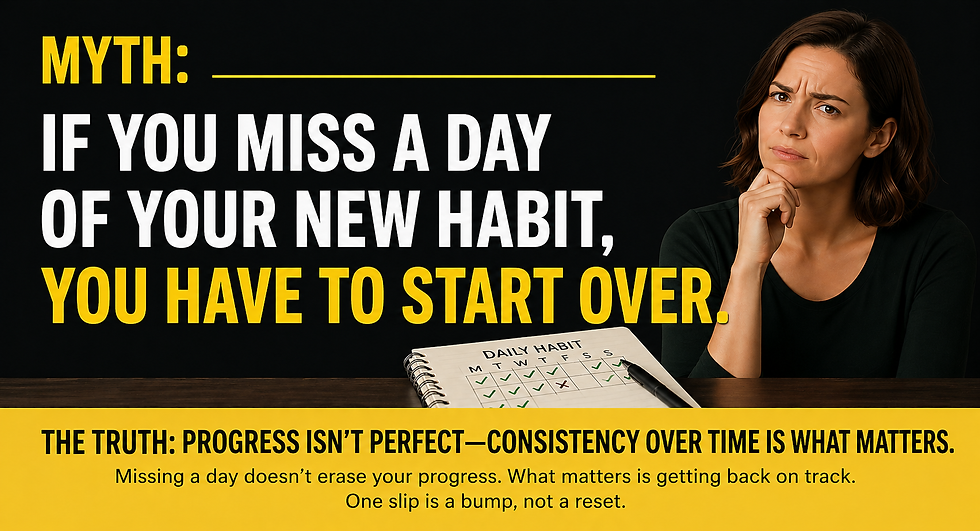
Myth 4: If you miss a day of your new habit, you have to start over. Lally et al. (2010) tracked 96 volunteers who formed new daily behaviors over 84 days and found that missing a single day resulted in a negligible drop in automaticity. The habit formation process was robust to occasional lapses. This directly contradicts the all-or-nothing thinking that leads patients to abandon a new behavior after one imperfect day.
CBT’s graded task-assignment approach is consistent with this finding: progress is measured by trajectory rather than perfection. Clinicians should explicitly normalize occasional misses and frame them as expected rather than catastrophic.
Myth 5: Self-control means sacrificing pleasure for duty. Bernecker et al. (2025) found that people high in trait self-control genuinely prefer meaningful activities over purely pleasurable ones. They were not suppressing hedonic urges; they reported wanting the meaningful activity. Wenzel et al. (2026) confirmed that these individuals avoid temptations more naturally because they value productivity and purpose.
Self-control, at its best, is not deprivation but alignment between daily behavior and personal values. CBT’s values-based behavioral activation teaches the same principle: when behavior is connected to meaning, it feels rewarding rather than punishing. The clinical task is to help patients reframe self-control not as a sacrifice but as self-expression.

These five myths share a common structure. Each frames self-control as a battle against a fixed limitation, whether metabolic, psychological, or motivational. The evidence consistently points in the opposite direction: self-control is not about fighting harder but about thinking differently, planning concretely, designing environments wisely, and connecting behavior to what genuinely matters.
Key Takeaways
1. Willpower is not a limited resource that depletes with use. Instead, it is a maladaptive cognition that CBT practitioners should identify and restructure using Socratic questioning and cognitive restructuring techniques.
2. Self-control does not run on blood sugar. The glucose fuel hypothesis has failed meta-analytic testing, and the apparent benefits of sugar are driven more by beliefs about willpower than by metabolism. Clinicians should challenge this myth rather than reinforce it.
3. Effective self-control is not about resisting temptation but about preventing it. People with high trait self-control succeed through stimulus control and environmental restructuring, making CBT’s behavioral techniques the treatment of choice.
4. Habits do not require perfection to form, and one missed day does not erase progress. Graded task assignment, starting small, tracking consistently, and building over roughly 8 to 12 weeks (with substantial individual variation), aligns with the habit formation evidence and inoculates patients against all-or-nothing thinking.
5. Self-control at its best is not sacrifice but values-aligned living. Helping patients connect daily health behaviors to personal meaning through values-based behavioral activation transforms self-regulation from a chore into a source of genuine satisfaction.
Glossary
all-or-nothing thinking: a cognitive distortion in which a person sees outcomes in extreme, binary categories. In self-control contexts, this manifests as beliefs like “If I miss one day, the whole habit is ruined.”
anterior cingulate cortex: a brain region involved in reward processing, conflict monitoring, and motivational decision-making. Oral glucose receptors may activate this area, providing a motivational rather than metabolic boost.
automatic thought: in CBT, a spontaneous, often unexamined cognition that arises in response to a situation and influences emotion and behavior. Thoughts like “I’ve used up my willpower” are automatic thoughts that predict self-control failure.
automaticity: the degree to which a behavior is performed without conscious deliberation, typically as a result of repeated practice in a consistent context.
behavioral activation: a CBT technique in which patients schedule and perform valued activities to improve mood, based on the principle that behavior change can precede and drive cognitive and emotional change.
cognitive behavioral therapy (CBT): a structured, time-limited form of psychotherapy that helps people identify and change unhelpful thought patterns and behaviors that contribute to emotional distress.
cognitive restructuring: a central CBT technique in which patients learn to identify maladaptive automatic thoughts, evaluate the evidence for and against them, and generate more accurate and functional alternatives.
core belief: in CBT, a deeply held, often implicit assumption about oneself, others, or the world that organizes interpretation of experience. The belief that willpower is a finite resource functions as a core belief about self-regulatory capacity.
ego depletion: the theoretical state in which self-control capacity is temporarily reduced following prior exertion of willpower. Large-scale replication studies have failed to support this effect.
external locus of control: the belief that one’s outcomes are determined by outside forces rather than one’s own actions. The glucose fuel hypothesis reinforced this orientation by attributing self-control failures to blood sugar levels rather than to strategy.
glucose model of self-control: the hypothesis that willpower depends on blood glucose as a metabolic fuel. Meta-analytic evidence has failed to support this model.
graded task assignment: a CBT technique in which a complex or overwhelming goal is broken into small, manageable steps that progressively increase in difficulty as the patient builds mastery and self-efficacy.
habit stacking: a behavior change strategy in which a new desired behavior is linked to an existing habitual routine, using the established habit as a cue.
implementation intention: a self-regulation strategy in the if-then format that specifies when, where, and how a person will carry out a goal-directed behavior, automating the initiation of the response.
lateral prefrontal cortex: a brain region associated with effortful, top-down cognitive control, including deliberate decision-making and impulse suppression.
medial prefrontal cortex: a brain region associated with automatic, stimulus-driven processing, which is more active when behavior is guided by implementation intentions.
meta-analysis: a statistical method that combines results from multiple independent studies to estimate an overall effect size.
preregistered replication: a study in which hypotheses, methods, and analysis are publicly registered before data collection, reducing publication bias.
publication bias: the tendency for studies with significant results to be published at higher rates than null findings, inflating apparent effect sizes.
self-efficacy: a person’s belief in their capacity to execute behaviors necessary to produce specific outcomes. Successful completion of graded tasks builds self-efficacy.
stimulus control: a behavioral technique in which environmental cues for undesired behaviors are removed or reduced, and cues for desired behaviors are introduced or strengthened.
trait self-control: a relatively stable individual difference in the general capacity to align behavior with long-term goals, typically measured via self-report.
values clarification: a CBT exercise in which patients identify their most important personal values, which then serve as guides for behavioral goal-setting and activation planning.
References
Baumeister, R. F., Bratslavsky, E., Muraven, M., & Tice, D. M. (1998). Ego depletion: Is the active self a limited resource? Journal of Personality and Social Psychology, 74(5), 1252–1265. https://doi.org/10.1037/0022-3514.74.5.1252
Bernecker, K., Becker, D., & Guobyte, A. (2025). High self-control individuals prefer meaning over pleasure. Social Psychological and Personality Science, 17(1), 38–46. https://doi.org/10.1177/19485506251323948
Carter, E. C., & McCullough, M. E. (2014). Publication bias and the limited strength model of self-control: Has the evidence for ego depletion been overestimated? Frontiers in Psychology, 5, Article 823. https://doi.org/10.3389/fpsyg.2014.00823
Dang, J. (2016). Testing the role of glucose in self-control: A meta-analysis. Appetite, 107, 222–230. https://doi.org/10.1016/j.appet.2016.07.021
de Ridder, D. T. D., & Gillebaart, M. (2017). Lessons learned from trait self-control in well-being: Making the case for routines and initiation as important components of trait self-control. Health Psychology Review, 11(1), 89–99. https://doi.org/10.1080/17437199.2016.1266275
de Ridder, D. T. D., van der Weiden, A., Gillebaart, M., Benjamins, J. S., & Ybema, J. F. (2020). Just do it: Engaging in self-control on a daily basis improves the capacity for self-control. Motivation Science, 6(4), 309–320. https://doi.org/10.1037/mot0000158
Ent, M. R., Baumeister, R. F., & Tice, D. M. (2015). Trait self-control and the avoidance of temptation. Personality and Individual Differences, 74, 12–15. https://doi.org/10.1016/j.paid.2014.09.031
Gailliot, M. T., & Baumeister, R. F. (2007). The physiology of willpower: Linking blood glucose to self-control. Personality and Social Psychology Review, 11(4), 303–327. https://doi.org/10.1177/1088868307303030
Gailliot, M. T., Baumeister, R. F., DeWall, C. N., Maner, J. K., Plant, E. A., Tice, D. M., Brewer, L. E., & Schmeichel, B. J. (2007). Self-control relies on glucose as a limited energy source: Willpower is more than a metaphor. Journal of Personality and Social Psychology, 92(2), 325–336. https://doi.org/10.1037/0022-3514.92.2.325
Galla, B. M., & Duckworth, A. L. (2015). More than resisting temptation: Beneficial habits mediate the relationship between self-control and positive life outcomes. Journal of Personality and Social Psychology, 109(3), 508–525. https://doi.org/10.1037/pspp0000026
Gilbert, S. J., Gollwitzer, P. M., Cohen, A. L., Oettingen, G., & Burgess, P. W. (2009). Separable brain systems supporting cued versus self-initiated realization of delayed intentions. Journal of Experimental Psychology: Learning, Memory, and Cognition, 35(4), 905–915. https://doi.org/10.1037/a0015535
Gillebaart, M., & de Ridder, D. T. D. (2015). Effortless self-control: A novel perspective on response conflict strategies in trait self-control. Social and Personality Psychology Compass, 9(2), 88–99. https://doi.org/10.1111/spc3.12160
Gollwitzer, P. M., & Sheeran, P. (2006). Implementation intentions and goal achievement: A meta-analysis of effects and processes. In M. P. Zanna (Ed.), Advances in Experimental Social Psychology (38, pp. 69–119). Elsevier Academic Press. https://doi.org/10.1016/S0065-2601(06)38002-1
Gollwitzer, P. M., & Sheeran, P. (2006). Implementation intentions and goal achievement: A meta-analysis of effects and processes. Advances in Experimental Social Psychology, 38, 69–119. https://doi.org/10.1016/S0065-2601(06)38002-1
Hagger, M. S., Chatzisarantis, N. L. D., Alberts, H., Anggono, C. O., Batailler, C., Birt, A. R., Brand, R., Brandt, M. J., Brewer, G., Bruyneel, S., Calvillo, D. P., Campbell, W. K., Cannon, P. R., Carlucci, M., Carruth, N. P., Cheung, T., Crowell, A., De Ridder, D. T. D., Dewitte, S., ... Zwienenberg, M. (2016). A multilab preregistered replication of the ego-depletion effect. Perspectives on Psychological Science, 11(4), 546–573. https://doi.org/10.1177/1745691616652873
Hofmann, W., Baumeister, R. F., Förster, G., & Vohs, K. D. (2012). Everyday temptations: An experience sampling study of desire, conflict, and self-control. Journal of Personality and Social Psychology, 102(6), 1318–1335. https://doi.org/10.1037/a0026545
Inzlicht, M., & Schmeichel, B. J. (2012). What is ego depletion? Toward a mechanistic revision of the resource model of self-control. Perspectives on Psychological Science, 7(5), 450–463. https://doi.org/10.1177/1745691612454134
Job, V., Dweck, C. S., & Walton, G. M. (2010). Ego depletion—Is it all in your head? Implicit theories about willpower affect self-regulation. Psychological Science, 21(11), 1686–1693. https://doi.org/10.1177/0956797610384745
Job, V., Walton, G. M., Bernecker, K., & Dweck, C. S. (2013). Beliefs about willpower determine the impact of glucose on self-control. Proceedings of the National Academy of Sciences, 110(37), 14837–14842. https://doi.org/10.1073/pnas.1313475110
Kurzban, R. (2010). Does the brain consume additional glucose during self-control tasks? Evolutionary Psychology, 8(2), 244–259. https://doi.org/10.1177/147470491000800208
Lally, P., van Jaarsveld, C. H. M., Potts, H. W. W., & Wardle, J. (2010). How are habits formed: Modelling habit formation in the real world. European Journal of Social Psychology, 40(6), 998–1009. https://doi.org/10.1002/ejsp.67
Lurquin, J. H., & Miyake, A. (2017). Challenges to ego-depletion research go beyond the replication crisis: A need for tackling the conceptual crisis. Frontiers in Psychology, 8, Article 568. https://doi.org/10.3389/fpsyg.2017.00568
Molden, D. C., Hui, C. M., Scholer, A. A., Meier, B. P., Noreen, E. E., D’Agostino, P. R., & Martin, V. (2012). Motivational versus metabolic effects of carbohydrates on self-control. Psychological Science, 23(10), 1137–1144. https://doi.org/10.1177/0956797612439069
van der Weiden, A., Benjamins, J., Gillebaart, M., Ybema, J. F., & de Ridder, D. (2020). How to form good habits? A longitudinal field study on the role of self-control in habit formation. Frontiers in Psychology, 11, Article 560. https://doi.org/10.3389/fpsyg.2020.00560
Vohs, K. D., Schmeichel, B. J., Lohmann, S., Gronau, Q. F., Finley, A. J., Ainsworth, S. E., Alquist, J. L., Baker, M. D., Brizi, A., Bunyi, A., Butschek, G. J., Campbell, C., Capaldi, J., Cau, C., Chambers, H., Chatzisarantis, N. L. D., Christensen, W. J., Clay, S. L., Curtis, J., ... Albarracín, D. (2021). A multisite preregistered paradigmatic test of the ego-depletion effect. Psychological Science, 32(10), 1566–1581. https://doi.org/10.1177/0956797621989733
Wenzel, M., Friese, M., Hofmann, W., Milyavskaya, M., Radtke, T., Saunders, B., & Bernecker, K. (2026). Beyond resistance: Understanding trait self-control through strategic indulgence. Social Psychological and Personality Science. Advance online publication. https://doi.org/10.1177/19485506261422582
Wieber, F., Thürmer, J. L., & Gollwitzer, P. M. (2015). Promoting the translation of intentions into action by implementation intentions: Behavioral effects and physiological correlates. Frontiers in Human Neuroscience, 9, Article 395. https://doi.org/10.3389/fnhum.2015.00395

About the Authors
Fred Shaffer earned his PhD in Psychology from Oklahoma State University. He earned BCIA certifications in Biofeedback and HRV Biofeedback. Fred is an Allen Fellow and Professor of Psychology at Truman State University, where he has taught for 50 years. He is a Biological Psychologist who consults and lectures in heart rate variability biofeedback, Physiological Psychology, and Psychopharmacology. Fred helped to edit Evidence-Based Practice in Biofeedback and Neurofeedback (3rd and 4th eds.) and helps to maintain BCIA's certification programs. He is a recipient of AAPB's Distinguished Scientist Award and BFE's Lifetime Impact Award.

Zachary Meehan earned his PhD in Clinical Psychology from the University of Delaware and serves as the Clinic Director for the university's Institute for Community Mental Health (ICMH). His clinical research focuses on improving access to high-quality, evidence-based mental health services, bridging gaps between research and practice to benefit underserved communities. Zachary is actively engaged in professional networks, holding membership affiliations with the Association for Behavioral and Cognitive Therapies (ABCT) Dissemination and Implementation Science Special Interest Group (DIS-SIG), the BRIDGE Psychology Network, and the Delaware Project. Zachary joined the staff at Biosource Software to disseminate cutting-edge clinical research to mental health practitioners, furthering his commitment to the accessibility and application of psychological science.

Support Our Friends


Comments